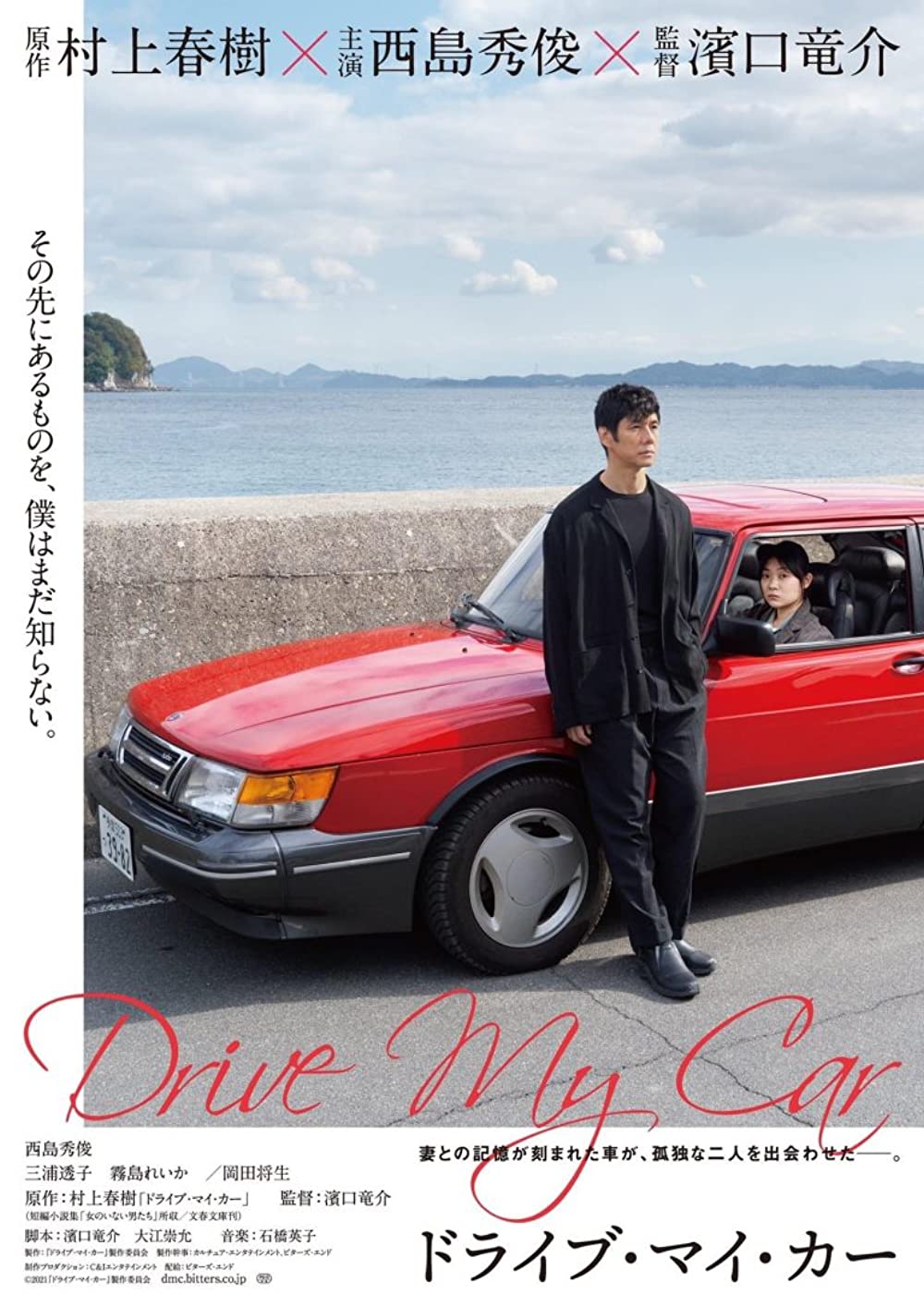
Directed by Ryûsuke Hamaguchi
Starring Hidetoshi Nishijima, Reika Kirishima, Masaki Okada, Tôko Miura, Sonia Yuan and Yoo-rim Park
A contemplative piece that amasses multitudinous questions and themes for viewers to analyse, Drive My Car is a contemporary and two-fold character-driven Japanese drama behind the wheel with road movie accompanying in the passenger seat.
At three hours and with its attention to detail, this Golden Globe Best Motion Picture – Non-English Language and 2021 Cannes Film Festival Best Screenplay awards winner, opts for the scenic route in navigating its story.
Primarily based on a 2014 short story collection, most of the story in the film is steered around renowned theatre actor and director Yûsuke Kafuku’s (Hidetoshi Nishijima) appointment as director of a rendition of Russian playwright Anton Chekhov’s Uncle Vanya in Hiroshima. It is here during repetitive script rehearsals and daily commutes that past tragedies and present mysteries will surface, merge, and haunt him.
Ambiguous and ambitious, Drive My Car indicates for its viewers to read between its reading of lines.

One of the very few non-negotiable characteristics of Drive My Car is its limitless and open fuel for thought. While its script never runs empty, the same cannot be guaranteed to our varying consumption capabilities. For me, there was plenty to appreciate, but not all roads travelled led to a final destination that is comprehensively rewarding of effort.
One of the script’s best attributes is its fascinating exploration of the connection between sex and emotional healing, where questions and doubts are raised about fidelity and how well we truly know the people closest to us. This is written with conviction, great depth, and clarity. How the film utilises several characters and amalgamates past and present when delving into these matters is mightily impressive and quite powerful. Some of these characters, which includes Yûsuke’s screenwriter wife, Oto (Reika Kirishima) and his driver, Misaki (Tôko Miura) to name a couple, are again impressively utilised when the film details how they harbour, reveal and deal with loss, grief, and guilt.
There is commentary available that observes the ability and inability to control one’s emotions and urges and exhibits some of the consequences arising from the loss of it. A curious juxtaposition of this is on display in the second half of the film involving Yûsuke and a young actor he casts in Uncle Vanya. Now that I mention the play, Drive My Car also looks at the commitment required of actors to portray their characters, but interestingly addresses the danger when actor loses oneself in the character.
Again, plenty of fuel for thought as you can now better fathom, and much of it is worthy of appreciation. I do however wish that other ostensible overlapping between the play in the film and the film itself would have made itself more apparent. Especially given the fact that a large amount of the film’s dialogue and screen time is dedicated to the actors’ rehearsals.
Drive My Car is showing in selected cinemas across Australia from February 10th.
Moviedoc thanks Potential Films for the screener link provided to watch and review this film.
Review by Leigh for Moviedoc
Follow on Twitter – Moviedoc / LIKE on Facebook – @moviedoc13 / Follow on Instagram – moviedoc_melbourne
©
 Moviedoc
Leave a comment