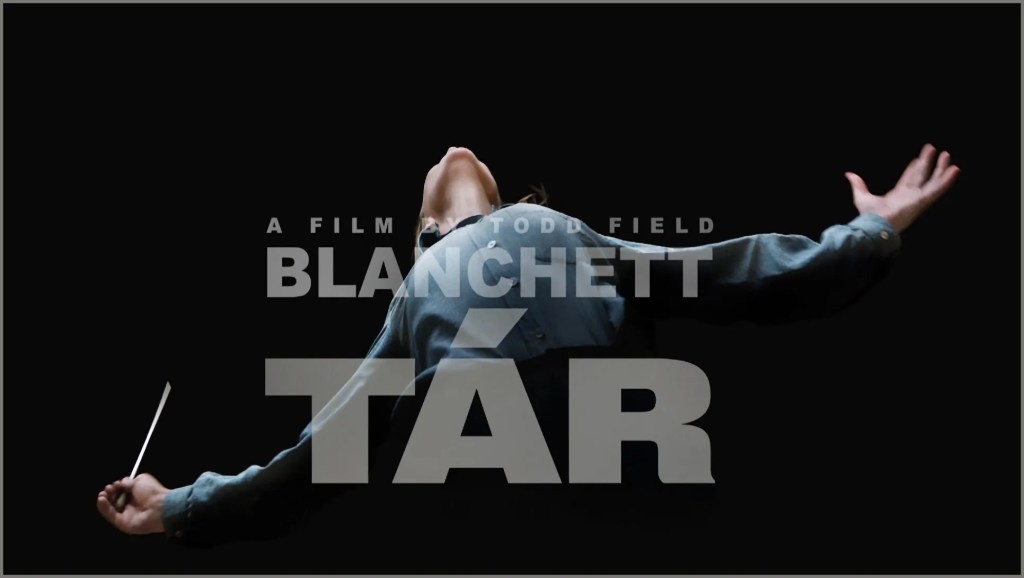
Director
Todd Field
(LITTLE CHILDREN)
Starring
Cate Blanchett, Noémie Merlant and Mark Strong
One thing is certain after watching Todd Field’s latest directorial effort is that the film is going to be divisive. There were more than a few confounded murmurings leaving the cinema after the near 3 hour slog that is the unique offering of Tár. Not afraid to smack its audience in the face with its own pretention, which is obvious from the outset when it decided to roll the entire technical credits before anything of substance even began, not allowing one the choice of ducking out at the end. Sure it’s not unusual to see the names of the stars or even the director or producer, and given the films subject matter you could even stretch to the composer (an impressive Hildur Guðnadóttir), but I sure as hell don’t need to know the name of the assistant to Cate Blanchett’s caterer before I’ve even heard a line of dialogue. The interesting thing about Tár though is that this pretention is both its greatest strength as well as its greatest detractor.
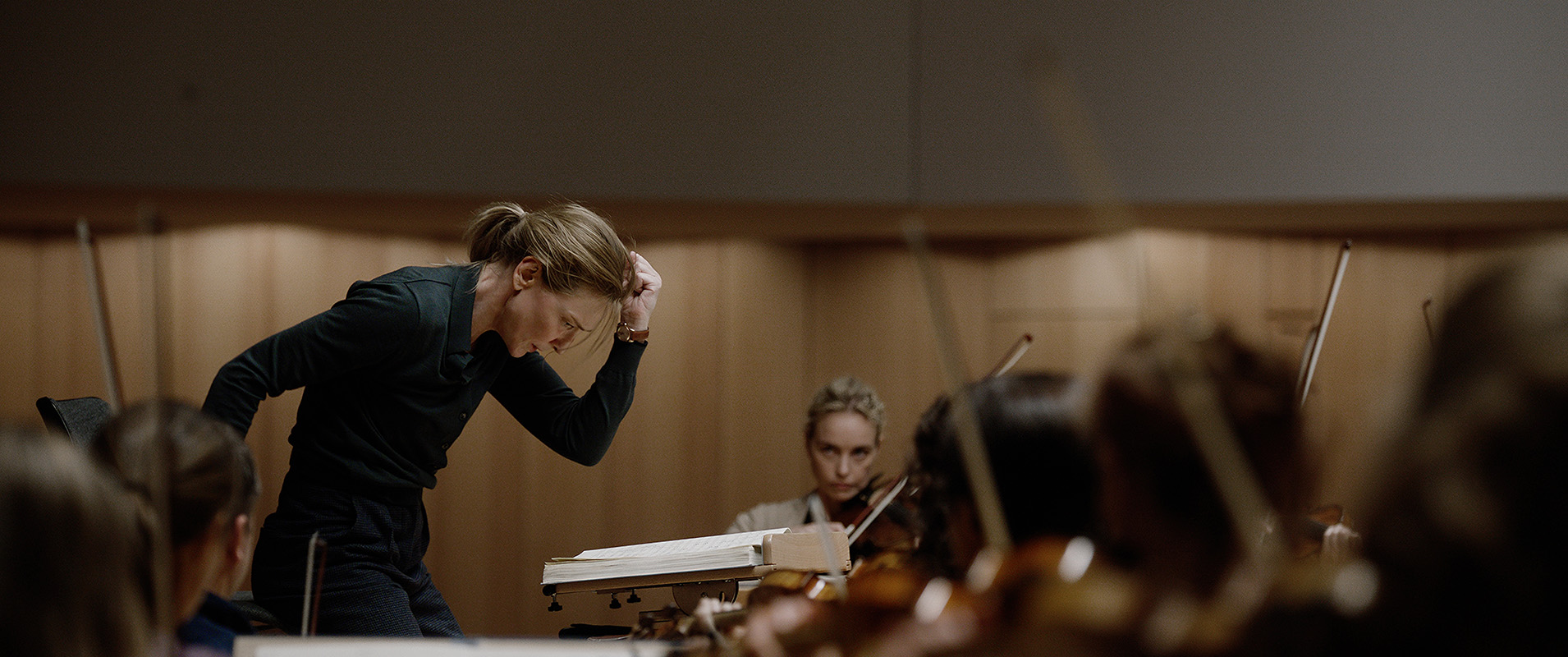
Tár takes its audience into the exclusive world of symphony composition with such incredible detail, best shown with our first real introduction to the films protagonist Lydia Tár (Cate Blanchett), a renowned US composer and the first female chief conductor of the Berlin Philharmonic. In this intro the fictional character is being interviewed by the very real Adam Gopnik, an acclaimed writer for The New Yorker. We hear in vivid detail the list of Lydia’s many impressive achievements as well as her insights into her upcoming recording of the prestigious Mahler’s Fifth Symphony. This scene is impressive in many ways, not only Cate Blanchett’s incredible portrayal as the confident, if not arrogant trailblazer in the heavily male dominated industry, but the level of detail the conversation goes into, which isn’t afraid to be too cerebral for its general audience. Todd Field who not only directed but also wrote the screenplay, has a broad history in the music world and has evolved that further in his clearly exceptional research for the film. This introduction is heavy, rich and wildly intriguing, and with just a slight variance either way it could have easily been the nail in the coffin for many audience members already put off by the opening credits. But instead it takes you by the hand and says ‘this is going to be detailed, you’re going to be confused, educated but you’re going to be equally enthralled’.
As we delve further into Lydia’s world, we learn she is married to fellow musician Sharon Goodnow (Nina Hoss) with the two sharing a young daughter, she is also accompanied everywhere by her hard working assistant Francesca (Portrait of a Lady on Fire’s Noémie Merlant). Lydia is not afraid to ruffle some feathers to get what she wants, or challenge societal views on cancel culture, however we soon discover that there are potentially a few skeletons lurking in Lydia’s closet, and maybe this phenom of the philharmonic might not be all that great off of the podium.

Tár soon becomes an examination of sorts of exploitation by people in positions of power. There is a blurry lens directed at predatory behaviour and perhaps a commentary on those who are ‘cancelled’ that we don’t really know if it’s real or imagined. This is where the film really starts to shift though. What’s been built up so steadily and thoroughly starts to spiral rapidly along with its star. There is a real shift in pace that almost feels uncomfortable, which is almost certainly the intention. Tár is also bursting with symbolism and meticulously hidden details, so meticulous in fact that most of them were sadly missed on initial viewing. This is a big criticism of the director trying to be too clever. Everything doesn’t have to be overt, but the audience shouldn’t need a tour guide to find the bread crumbs.

Some people are going to love the shift in intensity in the films’ final hour, others (like myself) might feel betrayed at it going so off course. I felt safe with where I was being taken by the director, only to have the rug pulled out from under me, left wondering what the hell just happened. That being said, one can’t take away from all of the things that work so brilliantly. Cate Blanchett is a tour de force in this incredibly challenging role. We all knew her to be a gifted actress, but this performance soars to new heights due to her level of commitment to embody this multifaceted character. If it is indeed her taking home a shiny new Oscar on the 13th of March, it won’t be undeserved. Todd Field has also created something truly unique. It might not be palatable for a lot of cinema goers, but those who do take the plunge and let themselves be immersed in this incredibly detailed world, will definitely have an experience they won’t soon forget.
It’s a film that I found myself still trying to dissect days after watching, and one that coming up with a rating for proved more difficult that I thought. I asked myself, ‘do I rate this based on overall enjoyment, which is often the case for my reviews?’ or ‘do I rate this based on the technical achievement of all facets of the film?’. In the end I landed somewhere in the middle. I realised it’s possible to wholeheartedly appreciate a film without really loving it. I definitely loved elements of it, particularly Cate Blanchett’s performance, but it isn’t going to be a film I ever find the need to watch again, even though that’s probably required to really take in all of its magnificent detail. Overall Tár is an impressive achievement in film, and deserves to be watched and discussed.
Tár is in cinemas now.
 Moviedoc
Leave a comment