
Director
Ellen Kuras
Starring
Kate Winslet, Andy Samberg, Alexander Skarsgård and Marion Cotillard
Lee, directed by Ellen Kuras and featuring a career best performance from Kate Winslet, is a compelling biopic that captures the life of American war photographer Lee Miller. The film ventures beyond the surface of Miller’s iconic status, delving into the complexities of her character, from her glamorous beginnings as a model to her daring work documenting the horrors of World War II. It’s a tribute to a woman who defied the boundaries imposed on her by society, evolving into an artist who brought the atrocities of the Holocaust to the world’s attention.

The film focuses on a pivotal period in Lee Miller’s life: her work as a correspondent during World War II. The story unfolds through a series of flashbacks, interweaving Miller’s personal struggles with the haunting realities of the war she was sent to capture. The non-linear narrative structure works well in Kuras’ hands, reflecting the fragmented nature of memory and trauma.
Kuras, primarily known for her cinematography, makes a confident directorial debut, but her background is evident in the stunning visuals, particularly in the war sequences. Kuras doesn’t shy away from depicting the brutalities of war but doesn’t rely on heavy handed gore and bloodshed to make an impact either.
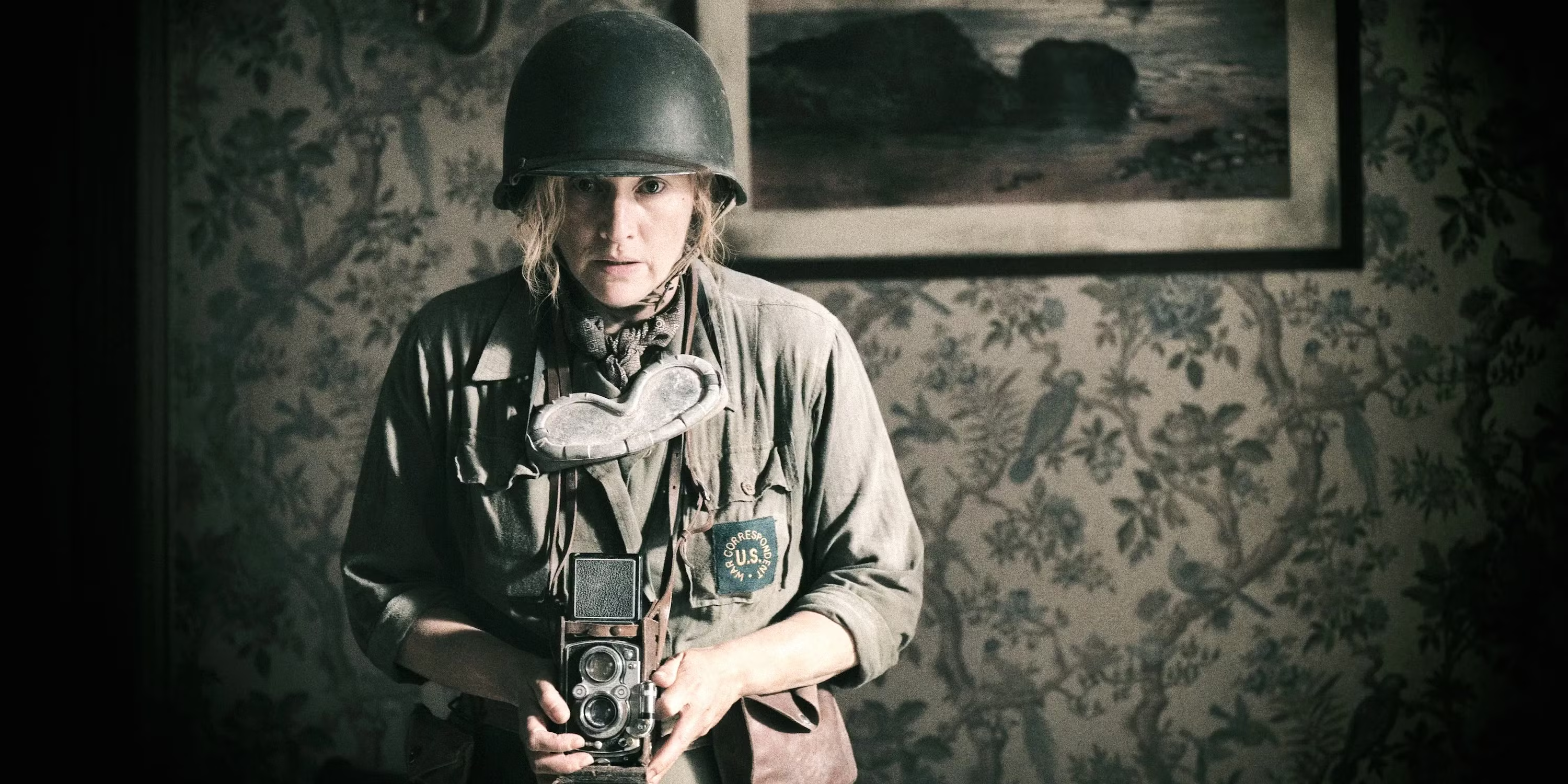
Kate Winslet delivers a towering performance as Lee Miller, embodying her strength, vulnerability, and contradictions. Winslet masterfully balances the steeliness required to document the unimaginable with the emotional toll such work exacts on a person. Her portrayal is nuanced, never tipping too far into melodrama, even in the film’s most harrowing moments. There’s a quiet fury in Winslet’s performance, especially when Lee confronts her own past and the confines of her identity as a woman in a world dominated by men. This is arguably Winslet’s greatest performance to date, and if hers is not a name read out as an Oscar contender come March, something is seriously wrong in Hollywood. It would take a monumental performance to beat what she’s delivered in this film.
The supporting cast is equally strong. Alexander Skarsgård plays Roland Penrose, Miller’s eventual husband, with a sensitivity that contrasts the tough, distant personas in many of his previous roles. Marion Cotillard, as Miller’s close friend Solange, adds warmth and a grounded presence in the chaos, while Andy Samberg’s casting as the journalist David Scherman is a pleasant surprise, in perhaps his most dramatic role, he blends humor with an understated depth in a memorable performance.
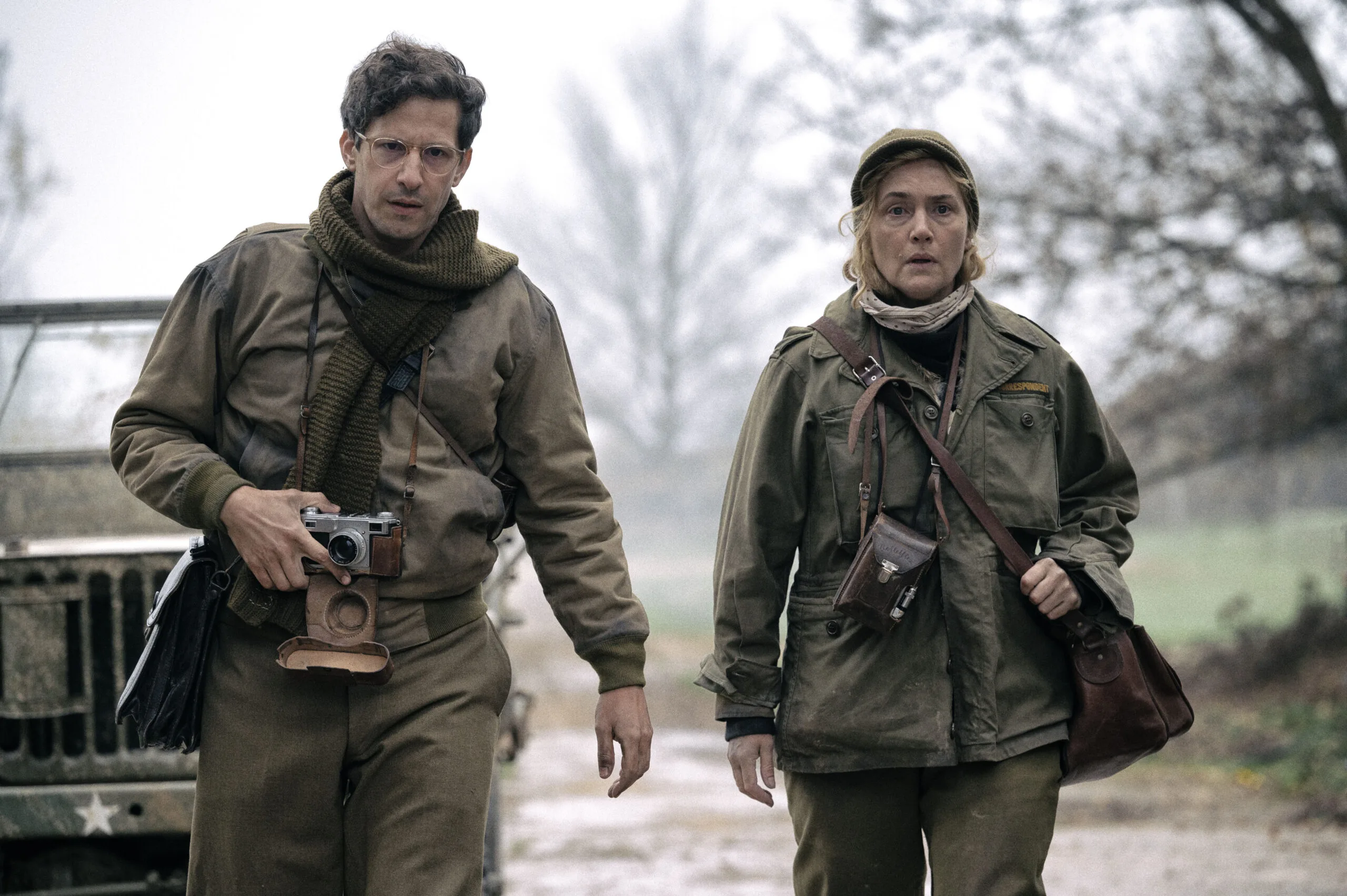
At its heart, Lee is a story about identity, trauma, and the transformative power of art. The film doesn’t shy away from showing the brutal realities of war, but it also asks deeper questions about the ethics of representation. As Lee grapples with the responsibility of capturing death and destruction, the film questions the role of art in wartime, whether it is a form of escapism or a necessary tool to hold humanity accountable.
The film also delves into gender dynamics, showing the unique challenges Miller faced as a woman trying to carve out her space in a male-dominated field. Her frustrations with societal expectations are palpable, and the film subtly explores how these pressures shaped her artistic choices and personal life.
Lee is not a conventional biopic. It eschews a straightforward, linear recounting of Miller’s life in favour of a more intimate, fragmented portrayal of a woman caught between two worlds—art and war. Anchored by Winslet’s outstanding performance, the film challenges the audience to rethink not only the role of art in documenting history but also the complexities of the people behind the lens.
Having first seen this film some months ago at the Melbourne International Film Festival, it’s one that has stayed with me since. It’s rare that I truly implore readers to see a film, but this one in is an exception. Currently equal at the top of my films for 2024, Lee is a beautiful masterpiece, and one that I daresay would be receiving a lot more fanfare if the protagonist were a man, which is very much in line with many of the themes of the film.
Lee is in cinemas October 24th
 Moviedoc
Leave a comment