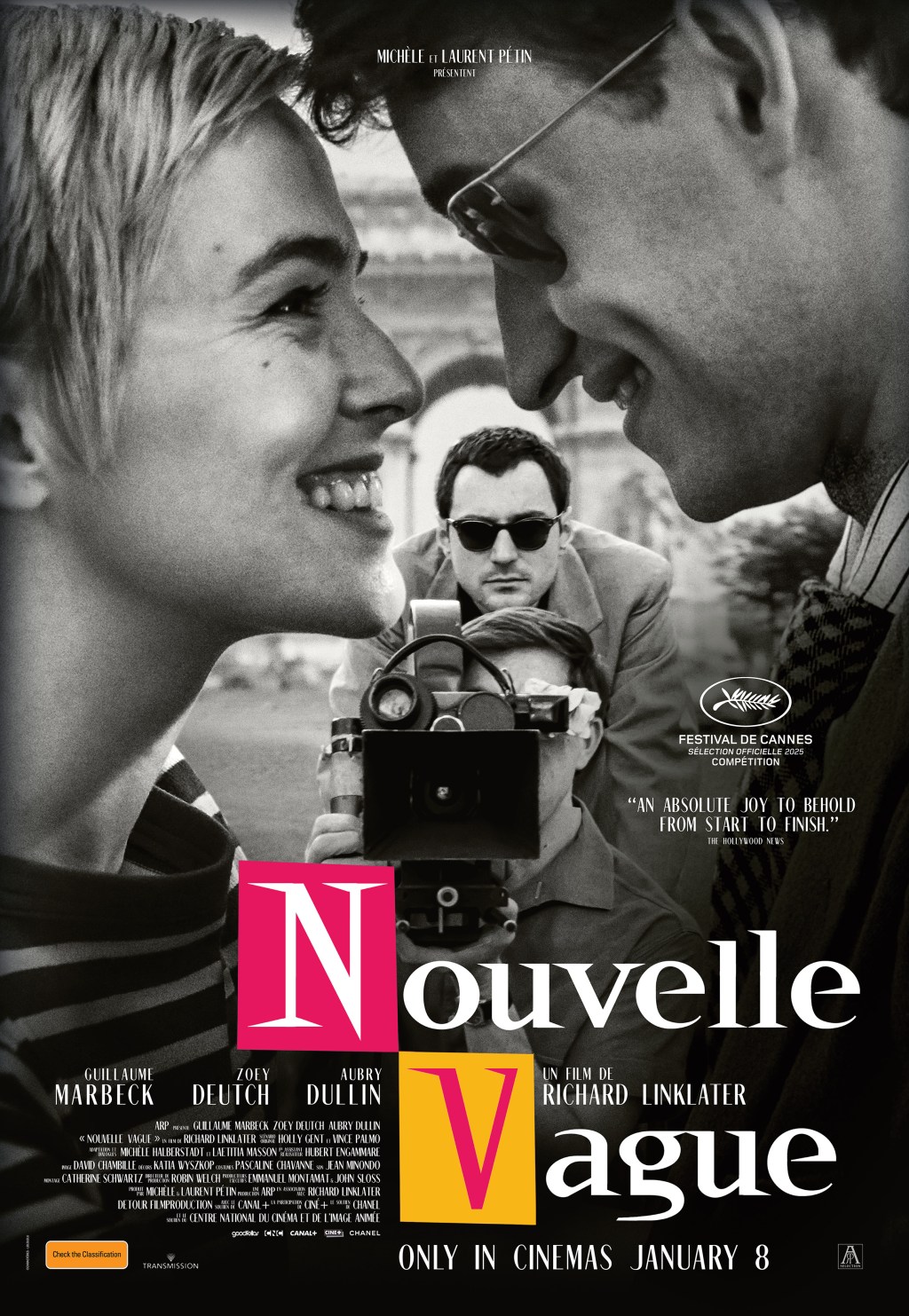
DIRECTOR
Richard Linklater
Blue Moon, Hit Man, Last Flag Flying, Everybody Wants Some, Boyhood, The ‘Before’ Trilogy, Waking Life, Dazed and Confused
STARS
Guillaume Marbeck, Bruno Dreyfürst, Zoey Deutch, Aubry Dullin and Matthieu Penchinat
Far too often, I have watched and reviewed a modern remake or reimagining of an older work I have not seen. Ever since the release of Nosferatu early last year, I have made greater efforts to change that and, in turn, broaden my overall perspective of the modern retelling I am reviewing.
Truthfully, as both a writer and film aficionado wishing to view the latest Linklater movie, a filmmaker I hold in high regard whose films are by default always on my must-see list, it felt like a prerequisite I pre-watch the movie that Nouvelle Vague curiously reimagines the making of – Jean-Luc Godard’s Breathless from 1960.
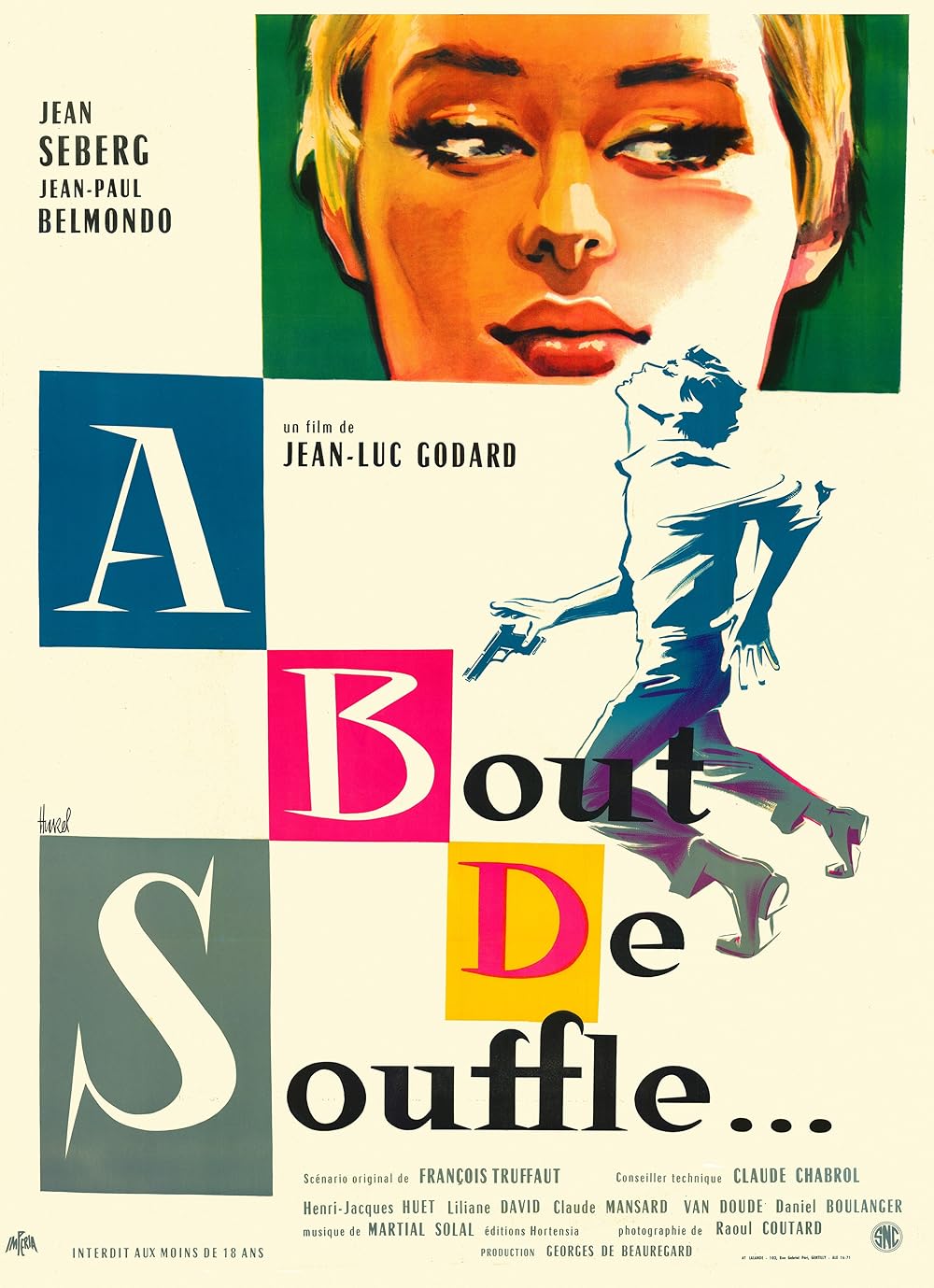
Breathless, which I watched 2 nights prior to the Nouvelle Vague screening I attended, together with Françios Truffaut’s The 400 Blows (1959) and Alain Resnais’ Hiroshima Mon Amour (1959), are pivotal examples of a French art film movement (French New Wave) that to this day is considered one of the most influential movements in cinema’s rich history. These films (thankfully) gave the middle finger to cinema conventions and exhibited different and new ways of moviemaking.
Not one person can deny the significance of Breathless for the doors it flung open to the cinematic world, and the license film critic turned director Jean-Luc Godard has given to all others after him, and for this I am eternally grateful, but Breathless is a film I have very limited appreciation for. Being very brief, I found lead character Michel Poiccard sexist and unlikeable, the initially intriguing premise meandering and those infamous jump cuts terrible. It was certainly difficult to like most of its components as much as the camera does indeed love its gorgeous leads – Jean-Paul Belmondo and Jean Seberg. I mean, even they thought Breathless was a bad film and were surprised by its success!
I will admit, I thought twice about attending the Nouvelle Vague screening after seeing Breathless. What are the chances I could appreciate a film that reimagines the making of another I frankly did not like? When I learned some insider info on the making of Breathless and bearing in mind my trust and utmost appreciation in Richard Linklater as a filmmaker, with Nouvelle Vague being his first non-English film and a love letter to the French New Wave, I just could not refuse the opportunity.
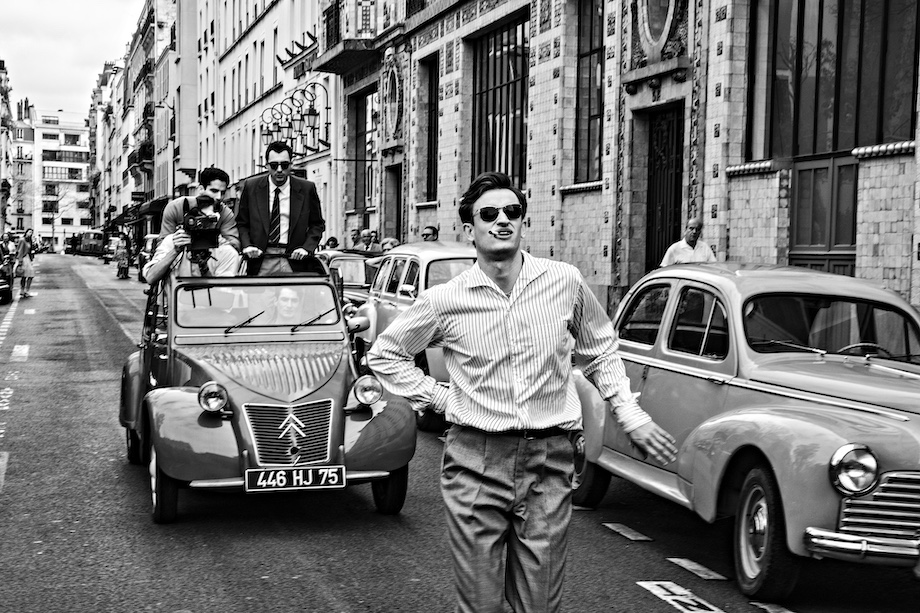
Shot in striking black and white and in the 4:3 non-widescreen aspect ratio, Nouvelle Vague is a handsome production and an undoubtedly well-made film, but was a very similar, almost esoteric-like viewing experience to another Linklater film from a decade ago, Everybody Wants Some.
I will be very sparing on details pertaining to the making of Breathless as chronicled here but will say I almost entirely attribute my mixed sentiments of this film to its content, which I felt on the outside watching in and find mostly inconsequential. Coincidently, I could not positively embrace Jean-Luc Godard’s filmmaking style or 1960 film and Nouvelle Vague could not inspire affection for him as a protagonist of this 2026 release. To say he is unconventional is an understatement. Jean-Luc (performed by Guillaume Marbeck) prefers to arrive on-set without a set plan of what filming will take place on the day, writes parts of the script during breakfast, wears sunglasses everywhere he goes (even inside the damn cinema, which irked me haha!) and is content to call it a wrap for the day without even filming a single scene! All of this despite the fact he has just 20 days to film his debut feature film and has an understandably very unsettled producer, Georges de Beauregard (Bruno Dreyfürst), and a contracted and highly sought after lead actress in Jean Seberg (a performance full of zip, pop and colour in this B&W production by a French-speaking Zoey Deutch) to be accountable to. No argument of his seems reasonable and without being able to properly read his facial expressions under those shades, he is quite the impenetrable character. Furthermore, many characters are introduced throughout the film but have little to no meaningful involvement, causing some further distance from the movie.
To end on a more positive note, audience members who are less concerned by individual characters and are more invested by their interactions and the ceaseless conundrums coming their way to commence and complete filming could be in for a true nostalgic treat watching Nouvelle Vague.
Nouvelle Vague is showing in selected cinemas across Australia from January 8th, 2026.
Moviedoc thanks TM Publicity for the invitation to the screening of this film.
Review by Leigh for Moviedoc
LIKE on Facebook – @moviedoc13 / Follow on Instagram – moviedoc_melbourne
©
 Moviedoc
Leave a comment