DIRECTOR
Mascha Schilinski
Dark Blue Girl (Die Tochter)
STARS
Hanna Heck, Lena Urzendowsky, Lea Drinda, Florian Geißelmann, Filip Schnack, Greta Krämer, Claudia Geisler-Bading, Zoë Baier, Luise Heyer and Laeni Geiseler
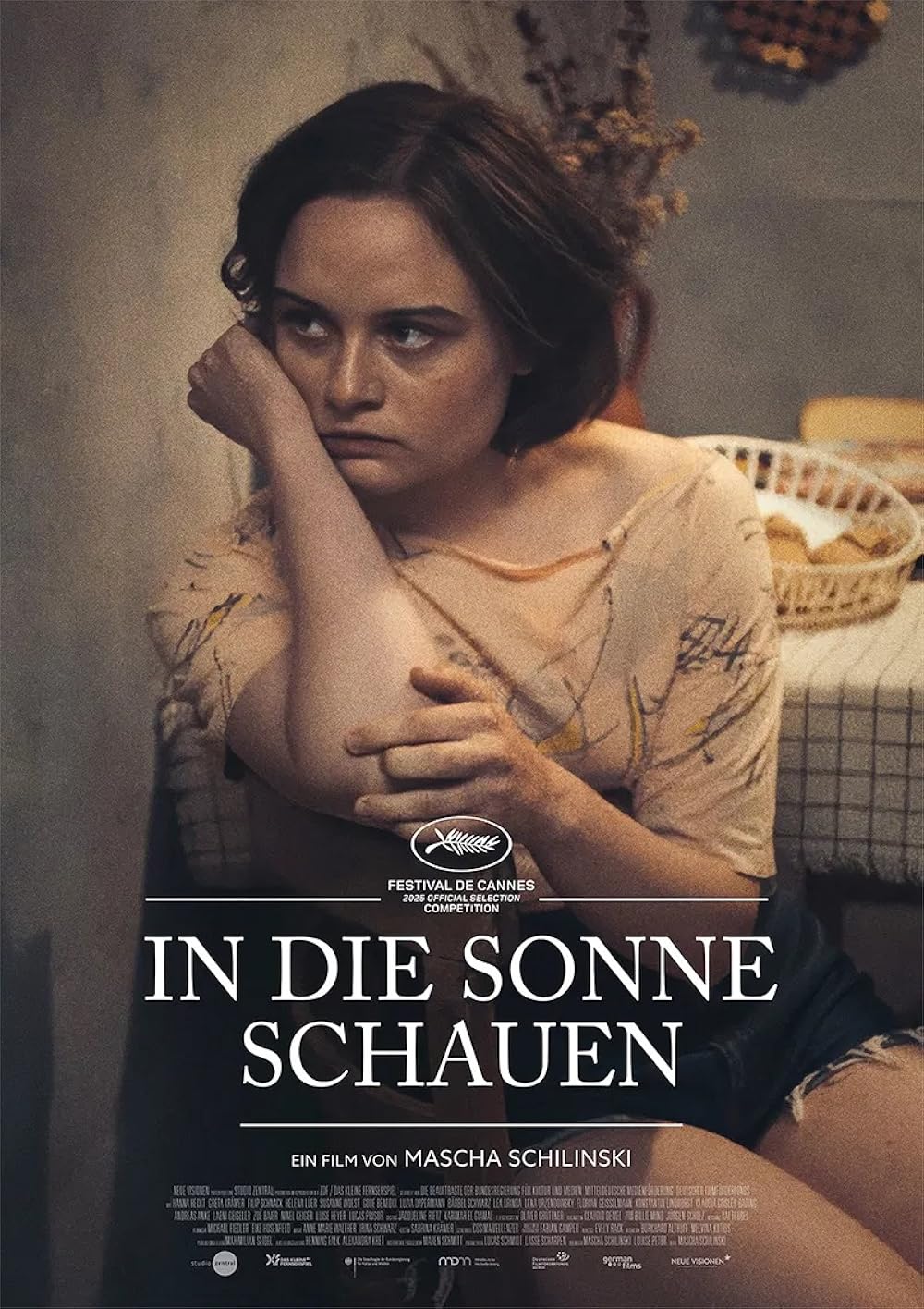
A German production spanning several timelines that features numerous characters who are in some way connected to each other.
This 2025 Cannes Film Festival Jury Prize Winner and Palme d’Or nominee, which was also Germany’s official submission for Best International Feature Film at the 2026 Academy Awards ®, shares these commonalities with another well-known German production; sci-fi time-travel Netflix series Dark, and is one that I found to be equally difficult to comprehend.
A farmstead in Northern Germany and the tragic events that have taken place on its land is what connects four generations of women across four decades.
Structured in non-linear style, there is 7-year-old Alma (Hanna Heck) who along with her many siblings, is growing up on the farm in the 1910s and whose mother appears to be in deep suffering. 1940s, which is where the film begins, Erika (Lea Drinda) exhibits physical curiosity towards a severely injured and bedridden man at the farmstead she resides. Moving forward four decades, teenager Angelika (Lena Urzendowsky) is coming of age on the rural farm and testing boundaries with others, especially with men. And in the 2020s, Lenka (played by Laeni Geiseler), the young daughter of a couple renovating the farmhouse tries to befriend a local girl who is escaping tragedy of her own.
The above synopsis I’ve written is admittedly heavily simplified and is my way of delivering some form of structure to Sound of Falling and is a peek through the window that eyes just a glimpse of the story housed by the film. Not that there really is much story being built throughout or that stands by the end of this challenging two-and-a-half-hour drama! Sound of Falling is arguably more accurately detailed as a movie visually exploring its reoccurring themes; loss, secrecy and eroticism, to name a few, just as much if not more than it does narratively. From a narrative standpoint, Sound of Falling heavily lacked clarity in what it conveyed and connected between timelines and characters and required post-film reading and discussion to attach context to perplexing developments throughout.
Yet, despite the significant storytelling shortcomings, Sound of Falling is miraculously mesmerising to experience from beginning to end! Experimental filmmaking is definitively not for all tastes and something I have struggled to appreciate many times before. Not entirely this time though! The visual style applied by second-time feature film director Mascha Schilinski and her cinematographer is irresistibly bewitching and the film’s music score utterly eerie (it reminded me of the score in horror feature Paranormal Activity!). The manner in which the camera tilts, zooms and pans towards and away from its characters and the graininess and blur of certain imagery captured using an aspect ratio of 1.33 : 1 is going to be affectionately etched in my memory for quite some time!
Mascha Schilinski marks her name as a director to watch with Sound of Falling. She exhibits an ability to visually allude to story in an attractive and curiously captivating way that I find rare. Should she ensure her next film’s narrative is more accessible and possesses greater clarity throughout, it could very well be a multi-award winning masterpiece! Perhaps that next film might belong to the horror genre!? Judging by how haunting Sound of Falling is often absorbed as a drama, I am confident she would manufacture a highly effective horror film!
Sound of Falling is showing in selected cinemas across Australia from June 4th, 2026.
Moviedoc thanks Transmission and TM Publicity for the invitation to view this film during its run at the HSBC German Film Festival in Melbourne.
Review by Leigh for Moviedoc
LIKE on Facebook – @moviedoc13 / Follow on Instagram – moviedoc_melbourne
©


Leave a Reply